


Renting a home in Malaysia can be exciting, until you realise how many deposits you need to pay upfront. There is the security deposit, the advance payment, and then a utility deposit. What is that, and why do you have to pay it?
Many tenants hand over these amounts without fully understanding what they cover or when they’ll get them back. This confusion often leads to disagreements at the end of a tenancy.
In this guide, we explain the three main types of rental deposits in Malaysia, what each one means, and how your utility deposit actually works, so you’ll know exactly what you’re paying for and how to protect your money.
| Table of Contents 1. Why Rental Deposits Matter in Malaysia 2. The Three Main Types of Rental Deposits 3. How the Utility Deposit Works in Malaysia 4. How Utility Deposits Differ From Security Deposits 5. Zero-Deposit Options and PropTech Alternatives in 2026 6. Planning to Rent a New Home Soon? Here’s How to Get Started Confidently |
Find Rental Homes That Fit Your Budget
Explore verified rental listings and discover properties available across Malaysia.
Why Rental Deposits Matter in Malaysia?
Before you sign your tenancy agreement, it’s important to understand why deposits exist in the first place. Rental deposits aren’t just about securing a home; they act as a financial safety net for both tenants and landlords throughout the tenancy period.
For tenants, paying a deposit builds trust with the landlord and guarantees that the property will be reserved once both parties agree on terms. For landlords, it provides protection against unpaid rent, property damage, or unsettled utility bills.
In Malaysia, most tenancy agreements follow a simple formula often written as “2 + 1 + ½.” This means two months’ rent for the security deposit, one month’s rent as the advance rental, and half a month’s rent for the utility deposit.
Understanding how each deposit works helps you plan your finances better and avoid misunderstandings later, especially when it comes to getting your refund at the end of your tenancy.
What Are the Three Main Types of Rental Deposits?
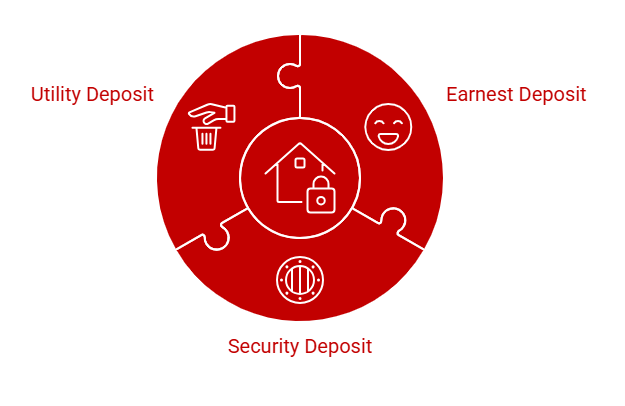
Most tenancy agreements in Malaysia include three key types of rental deposits. While they all serve different purposes, each one plays an important role in protecting both landlords and tenants.
Here’s a breakdown of what you need to know before you sign on the dotted line.
What Exactly Is an Earnest Deposit?
The earnest deposit, sometimes called the advance rental payment, is what you pay to show genuine interest in renting a property. Think of it as a reservation fee that tells the landlord you’re serious about proceeding.
This payment is typically made before signing the tenancy agreement and is often equivalent to one month’s rent. Once the tenancy begins, it’s either converted into your first month’s rental payment or offset against other deposits, depending on what’s agreed.
However, if you decide not to proceed after paying the earnest deposit, the landlord may have the right to forfeit the amount, as the property would have been taken off the market for you.
When Is It Paid and Refunded?
- Paid: Before signing the tenancy agreement (to secure the property)
- Refunded: If the deal falls through due to the landlord, or as part of the rent, once tenancy starts
Tenant Tip:
Before making payment, always check that the offer letter or tenancy agreement clearly states:
- Whether the earnest deposit is refundable
- Whether it will be used as part of your rent or as a separate payment
What Exactly Is a Security Deposit?
The security deposit is the main form of protection for landlords. It covers unpaid rent, property damage, or breach of contract if a tenant ends the lease early. For tenants, it’s a sign of good faith that they’ll take care of the property.
In Malaysia, landlords typically collect two months’ rent as the security deposit. This amount is held until the end of the tenancy and refunded once the property is returned in good condition and all rent is paid.
How It’s Used and Refunded
At the end of the tenancy, the landlord will inspect the property. If there’s no major damage and rent is up to date, the full security deposit should be refunded, usually within 30 days.
If repairs are needed beyond normal wear and tear, the landlord may deduct the cost from the deposit, with receipts or invoices provided for transparency.
Tenant Tip:
- Take photos or videos of the property during move-in to record its condition.
- Keep communication with your landlord in writing, as it helps if any dispute arises later.
What Exactly Is a Utility Deposit?
The utility deposit is often misunderstood, but equally important. It acts as a safety buffer for unpaid utility bills once a tenant moves out. This includes:
- Electricity (TNB)
- Water (Air Selangor)
- Sewerage (Indah Water)
- Gas or Internet services, if stated in the tenancy agreement
It ensures the landlord doesn’t end up paying your final bills after you vacate the property.
How Much Is a Utility Deposit?
Most landlords charge half a month’s rent, though some may request a full month’s rent depending on usage and property size. For example, if your monthly rent is RM2,000, your utility deposit is typically RM1,000.
This payment is made at the same time as your security deposit, during the signing of the tenancy agreement. You’ll often see this summarised as “2 + 1 + ½,” two months for security, one month for advance rent, and half a month for utilities.
Refund Process
When your tenancy ends, the landlord will review your final TNB, Air Selangor, and Indah Water bills to confirm that everything has been paid. If there are no outstanding amounts, the full deposit is refunded, usually within 30 days.
To speed things up, keep your last few bills and take photos of your meter readings before returning the keys. These documents help prevent disputes and ensure a faster refund.
How Utility Deposits Differ Between Property Types
While the purpose of a utility deposit is generally the same across all rentals, the way it is applied can differ depending on the type of property you rent.
- Serviced Residences or Condominiums: The utility deposit may include common-area charges, like shared water or maintenance bills managed by the JMB.
- Landed Homes: Usually limited to the tenant’s individual utility accounts, as payments go directly to service providers.
Tenant Tip:
Keep copies of all your utility receipts, and provide them to your landlord at the end of your tenancy. It’s the quickest way to get your utility deposit refunded without delay.
How the Utility Deposit Works in Malaysia
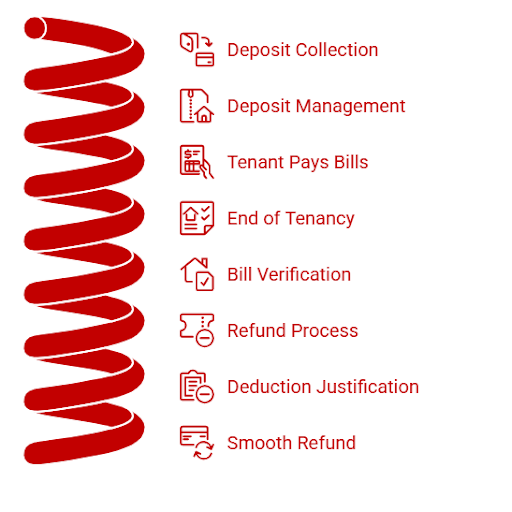
Understanding how the utility deposit works can save you from one of the most common rental misunderstandings, delayed or withheld refunds.
This deposit may seem small compared to the security deposit, but it involves a clear process that both tenants and landlords should follow.
1. When the Utility Deposit Is Collected
The utility deposit is collected at the start of the tenancy, usually together with the security deposit, when both parties sign the tenancy agreement.
This payment serves as a form of guarantee before the tenant takes possession of the property.
This payment serves as a form of guarantee before the tenant takes possession of the property.
Once paid, it remains in the landlord’s possession until the tenancy ends. Unlike the advance rental, which is used immediately, the utility deposit is held untouched throughout the lease.
2. How It’s Managed During the Tenancy
Throughout the tenancy, tenants are responsible for paying their monthly utility bills directly to the providers, such as Tenaga Nasional Berhad (TNB) for electricity and Air Selangor for water.
The landlord should not use the utility deposit during this period. It is not meant to offset regular bills. Instead, it stays as a form of financial assurance, in case the tenant leaves without paying the final utilities.
Good practice for both sides includes:
- Tenants: Keep digital or printed proof of monthly payments.
- Landlords: Periodically verify that the accounts are active and not in arrears (especially for shorter-term tenancies or new tenants).
3. What Happens at the End of Tenancy
When the tenancy ends, the handling of the utility deposit depends on the final billing cycle and account status.
Here’s how it usually works:
Here’s how it usually works:
- Tenant settles all final bills (electricity, water, sewerage, Internet if applicable).
- The tenant shares copies of the final receipts or screenshots of online payment confirmations with the landlord.
- The landlord verifies the bills or checks with the building management (for condominiums and serviced residences).
- If there are no outstanding charges, the utility deposit is refunded in full.
If there are pending bills or deductions, the landlord will use the deposit to pay those amounts and refund the remaining balance.
In some cases, particularly for apartments or properties with shared utilities, the final bills can take up to a month to arrive, which is why most landlords set a 30-day window for refunding the deposit.
4. When Deductions Are Justified
Landlords can only deduct from the utility deposit if:
- There are unpaid or overdue bills at the time of handover.
- The tenant has left without providing final bill receipts.
- There are common-area or management fees still outstanding (for condos or serviced apartments).
All deductions must be supported by official documents, such as a utility bill or management invoice. Any other deductions should come from the security deposit, not the utility deposit.
5. How to Ensure a Smooth Refund
To prevent delays or misunderstandings:
- Tenants:
- Settle all utilities before your move-out date.
- Take clear photos of meter readings on your last day.
- Keep copies of your final TNB, Air Selangor, and Indah Water receipts.
- Settle all utilities before your move-out date.
- Landlords:
- Request these documents early, ideally during the final inspection.
- Process the refund within the agreed timeline, usually 30 days after tenancy ends.
- Request these documents early, ideally during the final inspection.
A professional, transparent exchange ensures both sides part ways smoothly, with no unpaid bills and no deposit disputes.
The utility deposit doesn’t function like rent or a regular payment. It sits quietly throughout your tenancy, doing nothing until the day you move out. Then, it becomes proof of accountability for both parties: the tenant’s assurance that bills are paid, and the landlord’s guarantee that they won’t be left with unexpected costs.
Handled properly, it keeps the end of your tenancy simple, transparent, and stress-free.
How Utility Deposits Differ From Security Deposits
Many tenants in Malaysia assume the utility deposit and security deposit serve the same purpose since both are refundable. They protect against very different things; one covers unpaid bills, and the other covers the property itself.
Purpose
Protects the landlord from unpaid utility bills such as electricity, water, sewerage (Indah Water), gas, or Internet charges.
Covers unpaid rent, property damage, or costs arising from early termination of tenancy.
Typical Amount
Half to one month’s rent.
Two months’ rent.
When It’s Paid
Collected at the start of tenancy, together with the security deposit.
Collected at the start of tenancy, during the signing of the tenancy agreement.
When It’s Used
At the end of tenancy, to settle any outstanding utility bills.
At the end of tenancy, after property inspection for damages or arrears.
Refund Timeline
Refunded once all bills are verified as fully paid, usually within 30 days.
Refunded after inspection, minus deductions for repairs or unpaid rent.
Documentation Required
Final utility bills and payment receipts.
Inspection checklist, repair invoices, or rent records.
Who It Protects
Protects the landlord from unpaid service accounts.
Protects both landlord and tenant by ensuring property care and payment compliance.
Understanding this difference helps tenants know what each payment is for and ensures smoother, faster refunds when the tenancy ends.
Thinking About Buying Instead of Renting?
Compare monthly repayments and check the up-to-date loan estimate.
Zero-Deposit Options and PropTech Alternatives in 2026
Paying several months’ worth of rent upfront can make moving into a new home financially stressful. Between the security, advance, and utility deposits, tenants often need to set aside a large sum before even collecting the keys.
That’s why zero-deposit rental options are gaining traction in Malaysia. PropTech (property technology) platforms are introducing new ways to make renting more affordable without compromising landlords’ protection.
How Zero-Deposit Schemes Work
Instead of paying traditional deposits, tenants pay a smaller non-refundable fee or a monthly subscription to a platform that guarantees the landlord against losses.
For example, some companies offer verified zero-deposit rental programmes where:
- The tenant pays a small service or insurance fee instead of large deposits.
- The landlord receives insurance coverage against unpaid rent, damages, or even utility arrears.
- Tenants can move in faster without waiting to save several months’ worth of rent.
These digital rental models make the process easier, especially for young professionals and those relocating for work.
Benefits and Considerations of Zero-Deposit Rentals
Before deciding whether a zero-deposit rental suits your needs, it helps to understand how these arrangements affect both tenants and landlords. While they can make renting more affordable and flexible, they also come with their own terms and trade-offs.
For Tenants:
- Lower upfront costs, as there is no need to pay two to three months’ rent in advance.
- Faster move-in process once verified by the platform.
- Service or insurance fees are non-refundable, unlike regular deposits.
- Some landlords may still prefer traditional deposits, so it’s always best to confirm acceptance.
For Landlords:
- Wider tenant pool, as properties become more appealing with “zero-deposit” listings.
- Coverage for unpaid rent or damages through insurance-backed protection.
- Claims may take longer to process compared to using a held deposit.
- Platforms vary in coverage terms; always review the fine print before enrolling.
Key Questions to Ask Before Choosing a Zero-Deposit Scheme
Before signing up for any zero-deposit programme, tenants and landlords should clarify:
- What does the scheme cover: rent, damages, utility bills, or all three?
- What is the total cost, and is it refundable at any stage?
- Who handles claims or disputes, the platform or the insurer?
- How does the tenancy agreement reflect these arrangements?
Understanding these details ensures transparency and prevents unpleasant surprises later.
Planning to Rent a New Home Soon? Here’s How to Get Started Confidently
Understanding how each rental deposit works, especially the utility deposit, helps both tenants and landlords avoid confusion and disputes at the end of a tenancy. From earnest and security deposits to modern zero-deposit options, knowing your rights and responsibilities ensures a smoother and more transparent rental experience.
Planning to rent a new home soon? Ensure you understand the full cost breakdown, including deposits, tenancy agreement terms, and stamp duty, before signing any documents.
For more rental tips, housing guides, and property insights, visit the PropertyGuru Malaysia Guides section.
If you are considering transitioning from renting to owning, check out exclusive sales listings now.
Disclaimer: The information is provided for general information only. PropertyGuru International (Malaysia) Sdn Bhd makes no representations or warranties in relation to the information, including but not limited to any representation or warranty as to the fitness for any particular purpose of the information to the fullest extent permitted by law. While every effort has been made to ensure that the information provided in this article is accurate, reliable, and complete as of the time of writing, the information provided in this article should not be relied upon to make any financial, investment, real estate or legal decisions. Additionally, the information should not substitute advice from a trained professional who can take into account your personal facts and circumstances, and we accept no liability if you use the information to form decisions.