

Landed houses continue to attract strong demand in Greater KL in 2026, with many buyers still preferring landed houses over high-rise living despite rapid urban development. This shift reflects changing lifestyle priorities and a renewed focus on long-term comfort and space.
More Malaysians are now valuing privacy, larger layouts, and flexible home designs, especially after the pandemic reshaped how people live, work, and use their homes. These factors are driving steady interest in landed properties across both mature and emerging suburbs.
This article explores why landed houses remain in demand, the key factors behind this trend, the hotspots attracting buyers, and what to consider when investing in a landed home in Greater KL.
Find Your Dream Terrace House in Greater KL
Browse the latest terrace homes for sale across Kuala Lumpur.
What Defines a Landed House in Greater KL Today?
Before digging into demand trends, it helps to clarify what “landed house” means in today’s Greater KL context. In 2026, the term typically refers to homes with their own land plot, rather than strata-titled high-rise units. Common forms include:
- Terrace houses (single or double storey)
- Semi-detached houses
- Detached houses or Bungalow houses
- Cluster homes in gated or guarded communities
- Modern landed developments in master-planned or township settings
Compared with older landed stock, many new landed developments emphasise functionality for contemporary living: flexible floor plans to accommodate work-from-home, private gardens or yards, security via gated communities, and proximity to amenities in suburban townships.
Thus, a landed home in 2026 often offers a blend of traditional landed benefits (space, privacy) and modern conveniences (community facilities, secure access, township amenities).
Key Drivers Behind Rising Demand for Landed Homes in 2026
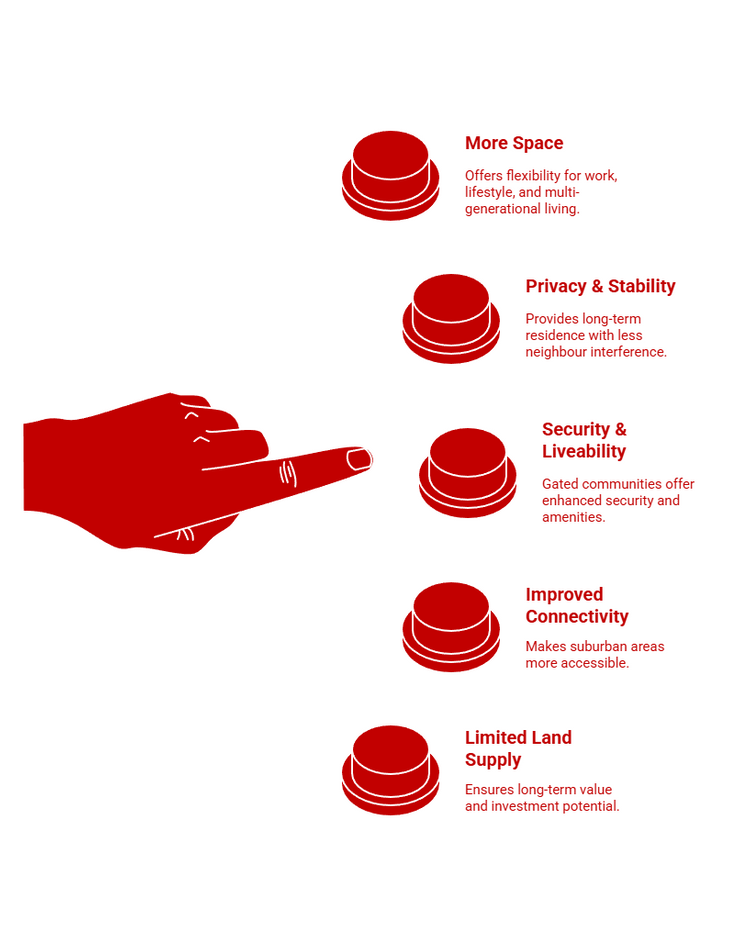
Buyers in Greater Kuala Lumpur continue to favour landed homes in 2026 as evolving household needs and improved suburban infrastructure highlight the value of space and privacy.
With more families seeking long-term stability and flexible living arrangements, landed houses offer a balance that many high-rise units cannot match, sustaining strong demand across the region.
- More Space for Work, Lifestyle, and Multi-Generational Living
One of the most significant drivers of landed-home demand is the continued desire for more space both indoors and outdoors. As families grow, or as parents live with adult children (multi-generational households), the limitations of typical high-rise units become more apparent. Landed houses offer larger built-up areas, private yards or gardens, and room for home offices or study spaces.
Post-pandemic, many buyers have come to value flexibility in living arrangements. Having a landed home allows for renovations, expansions, or repurposing rooms, something that is often impractical or restricted in strata-titled high-rise units.
A 2025 report by a major property portal found that many Malaysians continue to prefer landed properties precisely because of “larger living spaces, privacy, and the appeal of suburban living.”
- Preference for Privacy and Long-Term Stability
Landed homes tend to provide greater privacy, less neighbour interference, and a sense of permanence. For many families, this translates into a long-term home that can be passed down, customised, and made truly their own.
In contrast, high-rise living often involves shared walls, shared amenities, and standard maintenance, which may not suit those seeking stability or long-term residence.
Moreover, landed homes offer a lifestyle that does not depend on vertical no-lifts, no shared corridors, and generally fewer constraints on modifications or household habits.
- Gated and Guarded Communities Offering Better Security and Liveability
Modern township and suburban developments often deliver landed homes within gated and guarded communities, with added amenities such as parks, security patrols, communal facilities, and organised management.
These features address long-standing concerns about landed homes, such as security or isolation, making them more attractive, especially for families.
- Greater KL’s Improved Connectivity Enhances Accessibility
A significant factor enhancing the appeal of suburban landed homes is improved connectivity. Infrastructure developments, new and upgraded highways and expressways, and expanding transit links are making peripheral or suburban townships far more accessible.
As commuting becomes easier, the trade-off between distance from the city centre and quality of living shifts. Areas previously considered too far are now viable, making landed homes in these zones attractive to buyers looking for a balance between accessibility and space.
- Limited Land Supply Supporting Long-Term Value
Land scarcity in mature suburban corridors and urban fringe zones within Greater KL remains a key reason landed homes hold value. As available land plots shrink and demand rises, landed houses become a finite commodity.
Analysts have projected price increases for landed homes in the Klang Valley in 2025, with continued supply pressure expected into 2026.
As a result, landed homes remain not only residential assets but also long-term stores of value appealing to both end-users and investors.
Which Areas in Greater KL Are Seeing the Highest Landed-Home Demand in 2026?
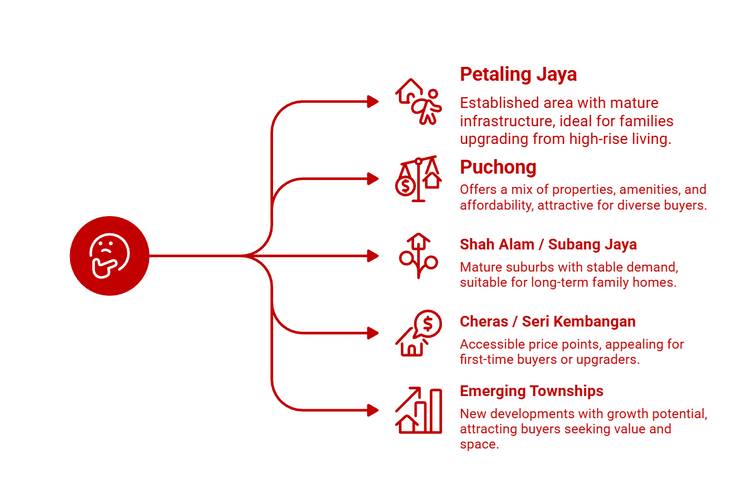
Demand for landed homes is not uniform across Greater KL. Specific suburbs and townships are attracting more interest, often driven by a combination of connectivity, amenities, price points, and supply dynamics. Below are some of the areas where demand is especially pronounced in 2026 (or expected to rise):
- Petaling Jaya established suburban area with relatively mature infrastructure, desirable for families upgrading from high-rise living.
- Puchong offers a good mix of landed properties, township amenities, and relative affordability compared with central KL.
- Shah Alam / Subang Jaya are mature suburbs where landed homes remain in demand for families seeking stable, long-term homes.
- Cheras fringe-to-mid suburbs offering landed houses at more accessible price points, attractive for first-time landed home buyers or upgraders.
- Emerging townships and outer suburbs, where new landed developments, gated communities, and master-planned townships are increasingly attracting buyers seeking value, space, and growth potential.
That said, the hottest pockets tend to be those that offer a balance: a reasonable distance to the city/work, access to highways or transit, local amenities (schools, shops, green space), and a comparatively affordable landed supply.
Pricing Trends: How Much Do Landed Homes Cost in 2026?
Understanding landed-home demand requires examining pricing dynamics. Recent data indicate a steady, modest upward trend in landed-home prices in Klang Valley:
- Analysts projected a 2025 price increase of around 3 to 4 per cent for landed homes in high-demand areas, driven by land scarcity and rising construction costs.
- A 2025 market snapshot suggests that while the overall house price index across Malaysia has stabilised with a modest national average price of around RM494,384 per unit as of Q3 2025, landed homes remain comparatively resilient.
- At the same time, high-rise overhang remains significant in many segments, especially apartments and serviced residences priced above RM500,000.
This means that well-located landed houses, especially in desirable suburbs or gated communities, continue to offer relatively stable appreciation potential. For many buyers and investors, this translates into long-term value, especially when compared with high-rise overhang and fluctuating high-rise pricing.
5 Landed Houses Exclusively Available in KL in 2026
Kuala Lumpur continues to offer a selection of newly developed landed homes in 2026 and beyond, with projects catering to a wide range of budgets, lifestyle needs, and tenure preferences. The following developments highlight key landed options currently available in the market.
2026
Leasehold
RM550,000 ~ RM1,118,000
Boutique terrace‑house project, well-suited to urban living in KL.
2025
Freehold
RM339,000 ~ RM3,500,000
Three-storey terrace-house, gated, landscaped environment with family-friendly amenities, located in a mature Cheras neighbourhood.
2026
Freehold
RM2,606,000 ~ RM4,239,880
Three‑storey landed units, high-end finish, located within an established KL neighbourhood, aimed at buyers seeking larger landed homes inside city limits.
Majestic @ Kiara Reserve
2029
Freehold
RM3,200,000 ~ RM4,700,000
Exclusive low-density villas, private lifts, and large layouts, surrounded by Bukit Kiara greenery with premium facilities.
2025
99-year Leasehold
RM486,000 ~ RM1,980,000
Spacious multi-level homes, KL city views, resort-style living close to key KL amenities, Titiwangsa connectivity.
These projects provide buyers with varied choices in pricing, tenure, and completion timelines, enabling households to select a landed home that aligns with their long-term plans and investment goals.
Check Your 2026 Affordability
Estimate your monthly instalments in seconds
New Township Developments Supporting Landed-Home Growth
Another trend boosting landed-home demand is the rise of new township developments and master-planned communities. Developers, recognising the demand for landed living and the needs of modern families, are delivering landed homes embedded within larger communities that offer amenities such as parks, recreational facilities, retail, and security.
Such developments bridge the gap between the benefits of a landed home and the convenience of urban living, appealing to those who want space without sacrificing accessibility or lifestyle.
Moreover, with fewer new large land parcels available in central urban areas, these townships, often on the fringe or in outer suburbs, represent one of the few feasible ways to deliver landed homes at scale, while offering modern conveniences and better infrastructure.
Who Should Buy a Landed Home in 2026?
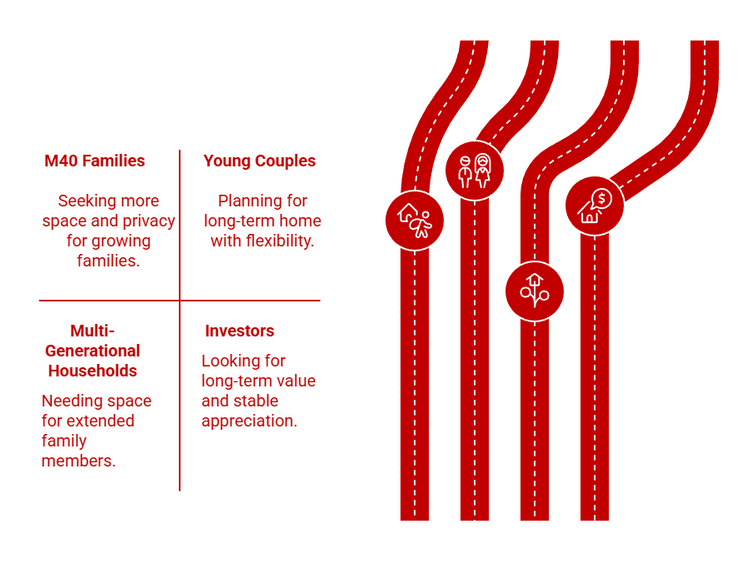
Landed-home demand today stems from a variety of buyer segments, each with distinct motivations.
- M40 Families Upgrading from High-Rise Units
Families in the middle-income (M40) group who initially bought condominiums or apartments are increasingly upgrading to landed homes as their household needs evolve, seeking more space, privacy, and room for children.
- Young Couples Planning Long-Term Homes
Younger couples, often entering family-planning stages, are considering landed homes as a long-term home base, valuing flexibility, potential for personalisation, and the ability to grow into the home over time.
- Multi-Generational Households
In many Malaysian families, it is common to have extended or multi-generational households. Landed houses offer the space and flexibility needed for rooms for elderly parents, children, or even live-in help, which high-rise units often cannot accommodate.
- Investors and Long-Term Value Seekers
Given land scarcity and the relative resilience of landed-home pricing in many suburbs, some buyers view landed homes as long-term value investments, expecting more stable appreciation over time compared with specific high-rise segments that might face oversupply or overhang.
Landed homes in 2026 ultimately suit buyers who prioritise space, long-term flexibility, and enduring value, making them a practical choice for households planning for future growth.
Should You Buy a Landed House in 2026? Key Considerations
If you are considering buying a landed home in Greater KL in 2026, here are some factors to weigh the pros and the trade-offs.
Pros
- More space (indoors and outdoors), with flexibility for home office, garden, expansion, and privacy
- Long-term value potential due to land scarcity and demand
- Stability and ability to customise/renovate without strata restrictions
- Gated/guarded community options in modern developments with amenities and security
- Suitable for families, multi-generational living, and long-term residence
Buyers should therefore carefully evaluate their needs, budget, and lifestyle before making a decision. For some, a landed home may offer long-term benefits and satisfaction; for others, a well-located high-rise may still make more sense.
The Future of Landed Living in Greater KL Beyond 2026
In 2026, landed homes remain highly relevant in Greater KL not because of nostalgia, but because they align closely with modern homebuyer needs: space, privacy, flexibility, and long-term value.
While high-rise developments will continue to play a role particularly for urban convenience seekers, landed properties offer a compelling alternative for those prioritising lifestyle, stability, and room to grow.
For families, upgraders, and long-term homeowners, landed homes remain a sound choice. For investors and value seekers, the scarcity of land and resilient demand suggest that landed homes can deliver steady appreciation.
Ultimately, whether you choose landed or high-rise depends on your priorities. But as the data and market sentiment suggest, landed homes in the correct location remain a strong bet for 2026 and beyond.
For more insights into Malaysia’s evolving property landscape, explore the latest PropertyGuru guides for buyers and investors.
If you are ready to discover opportunities, browse Malaysia’s curated property for sale listings and find a home that aligns with your goals for 2026.
Disclaimer: The information is provided for general information only. PropertyGuru International (Malaysia) Sdn Bhd makes no representations or warranties in relation to the information, including but not limited to any representation or warranty as to the fitness for any particular purpose of the information to the fullest extent permitted by law. While every effort has been made to ensure that the information provided in this article is accurate, reliable, and complete as of the time of writing, the information provided in this article should not be relied upon to make any financial, investment, real estate or legal decisions. Additionally, the information should not substitute advice from a trained professional who can take into account your personal facts and circumstances, and we accept no liability if you use the information to form decisions.