


Is the future of housing getting smaller? Micro houses may be small, but they’re one of the biggest new ideas to meet urban population growth around the world.
They’re also starting to enter the conversation here in Malaysia. So what are the major challenges we’re facing, what are micro homes, and just how do these tiny solutions help solve our housing problems?
Malaysia’s Big Housing Challenge

Things are getting crowded downtown. Malaysia is one of the most urbanised countries in all of East Asia, with urban populations growing from just 10 million in the year 2000 to 15 million by 2010.
You only have to take a drive through KL (or any major town of Klang Valley) at rush hour to see the truth behind those figures.
With analysts projecting that Malaysia will be home to an 80% urban population by 2030, that hustle and bustle won’t be going away anytime soon.
It’s not just our urban population that’s growing, it’s also our expectations of owning our own homes.
In 1972 there were 182 households for every 1,000 people in Malaysia according to Khazanah Research Institute. By 2020, they predict that number will reach 250 households for every 1,000 people.
Affordability is an equally vital part of the housing puzzle. Bank Negara estimates that the maximum price of affordable housing in Malaysia stands at RM282,000.
On the other hand, the median house price throughout the country is RM313,000. That disconnection is particularly acute in popular urban locations like Kuala Lumpur.
So as young Malaysians grow up with hopes of owning their own homes, and populations increasingly shift towards urban locations, are micro homes the answer to our problems?
Exploring a Micro Housing Solution

It’s small, it’s compact, it’s designed to include all your modern living needs – it’s micro housing! But it’s not entirely clear what that might mean in practice.
Unfortunately, there’s no rigid definition of what a micro home should be. Even the size can vary, as long as it’s little, with micro homes coming in between 200-350 sq ft.
A recent project as part of the World Urban Forum saw two such micro homes constructed in downtown KL, showcasing housing solutions that fit into the size of two parking spaces.
At 264 and 320 sq ft, these pilot projects offer a pocket-sized peek into the possible homes of the future. Micro homes often follow a communal living approach.
Residents own small private areas for their own comfort, while centralised communal kitchens and shared spaces offer a convenient, space-saving and cost-reducing solution to the needs of modern living.
Most micro housing solutions are targeted at younger prospective homeowners, offering a (small) step-up onto the housing ladder in an accessible and affordable way.
One such example in recent times includes the micro-homes available for only RM100 a month, situated on Jalan Tuanku Abdul Rahman. The only catch is that they’re targeted at the single adults of the B40 population.
The units designed as part of the World Urban Forum perhaps offer a template of what these solutions should offer.
The installations were judged on affordability, buildability, efficiency, layout, as well as the ability to be installed and moved to pre-set locations.
That means a micro home should understandably meet the greatest challenges of our growing housing needs.
Malaysia isn’t the only nation toying with these tiny houses. As urban populations around the world grow, so too does international demand for innovative and affordable housing solutions.
This goes to show that the future for micro homes could be a whole lot bigger than the reality today.
The Future of Micro Housing in Malaysia
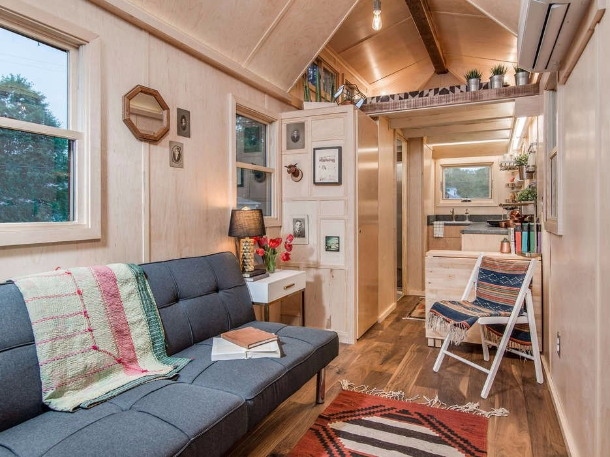
Micro homes offer an intriguing look at the future of housing, but it’s still uncertain what their full impact might be.
The two solutions on display for the World Urban Forum cost roughly RM100,000 and RM200,000 respectively.
While those figures reflect a proof-of-concept model, with costs predicted to fall for commercial construction, there’s still a question of whether future homeowners would be willing to pay the necessary prices for residences with such limited space.
Highly unaffordable housing markets such as Hong Kong are likely to take the lead on piloting these micro housing solutions.
The market pressures of such an expensive location may well push innovation faster than urban settings with less pressing housing needs.
Architects are already exploring commercial micro home solutions to address the substantial challenges that Hong Kong faces.
In the short term, micro homes are unlikely to have any significant impact on Malaysia’s housing market, with commercial development on any large scale still seemingly a distant opportunity.
With a solution that primarily addresses the needs of affordable housing, it’s also unlikely that such a roll-out would heavily impact current prices, but instead offer a new early-adopter solution for owners looking for a unique urban housing development.
When it comes to micro housing, the reality today is more of a big question, than a big solution. There’s no doubt that micro homes will emerge to play a role in Malaysia’s property market in future, but how big that role will be, that’s still open to interpretation.
Learn More About Freehold, Leasehold and Bumi Properties, Strata Management Act 2013, Strata & Individual Titles, Real Property Gain Tax, and The Differences Between SoHo, SoFo And SoVo. Otherwise Check Out PropertyGuru’s Guides For More Useful Information.
Keep Track of New Launches
Visit our new launches page to find the new launch project of your dreams and submit an enquiry today.

Disclaimer: The information is provided for general information only. PropertyGuru International (Malaysia) Sdn Bhd makes no representations or warranties in relation to the information, including but not limited to any representation or warranty as to the fitness for any particular purpose of the information to the fullest extent permitted by law. While every effort has been made to ensure that the information provided in this article is accurate, reliable, and complete as of the time of writing, the information provided in this article should not be relied upon to make any financial, investment, real estate or legal decisions. Additionally, the information should not substitute advice from a trained professional who can take into account your personal facts and circumstances, and we accept no liability if you use the information to form decisions.