

Buying a home is one of the biggest decisions many Malaysians will ever make. Yet, property fraud cases, unclear ownership histories, delayed strata title issuance, and master title complications remain common in 2026. These issues can cause long delays, unexpected costs, or even failed transactions.
This is why understanding the title deed meaning is essential before signing anything. A title deed confirms who truly owns the property, what rights it grants, and whether it is subject to restrictions or encumbrances. When buyers understand how title deeds work, they can protect themselves from risks and make confident decisions.
In this guide, you will learn what a title deed is, how it works in Malaysia, how to check one, and what to avoid during a property purchase.
Make Smart Home-Buying Decisions
Quickly estimate what you can borrow and repay.
Title Deed Meaning: What Exactly Is a Title Deed in Malaysia?
A title deed is the official document that proves you are the legal owner of a property in Malaysia. It shows your name, the property details, and the rights you hold as the owner. Without it, you cannot confirm ownership or complete key transactions such as selling, refinancing, or transferring the property.
In Malaysia, a title deed is issued and recorded under the National Land Code. Each title is registered at the state Land Office or Pejabat Tanah. This record is the highest form of proof that a property belongs to you.
For many buyers, the title deed also serves as peace of mind. It confirms that the property is legally recognised, free from ownership disputes, and properly registered with the Land Office.
Title vs Deed vs Title Deed: What’s the Difference?
Many buyers use these terms interchangeably, but they refer to different things. Knowing the difference can help you understand your rights and avoid confusion during a property transaction.
1. What does a title mean?
A title refers to your legal rights over a property. It shows who owns the land or unit and what rights come with it. When you "hold the title", it means you are recognised as the legal owner under the National Land Code.
2. What does a deed mean?
A deed is a legal document used to transfer ownership from one party to another. In Malaysia, this often involves documents such as the Sale and Purchase Agreement and the Memorandum of Transfer. These documents show how ownership is passed from the seller to the buyer.
3. What a Title Deed Means?
A title deed is the document that proves the current owner’s rights. It confirms that the transfer has been completed and registered at the Land Office. Once your name appears on the title deed, you become the official and legal owner of the property.
A clear understanding of these three terms helps you read property documents with confidence and avoid confusion during any transaction.
Types of Title Deeds in Malaysia
Title deeds come in different forms, and each carries its own rules and implications. Knowing these types can help you understand what you are actually buying and what to expect after the transaction.
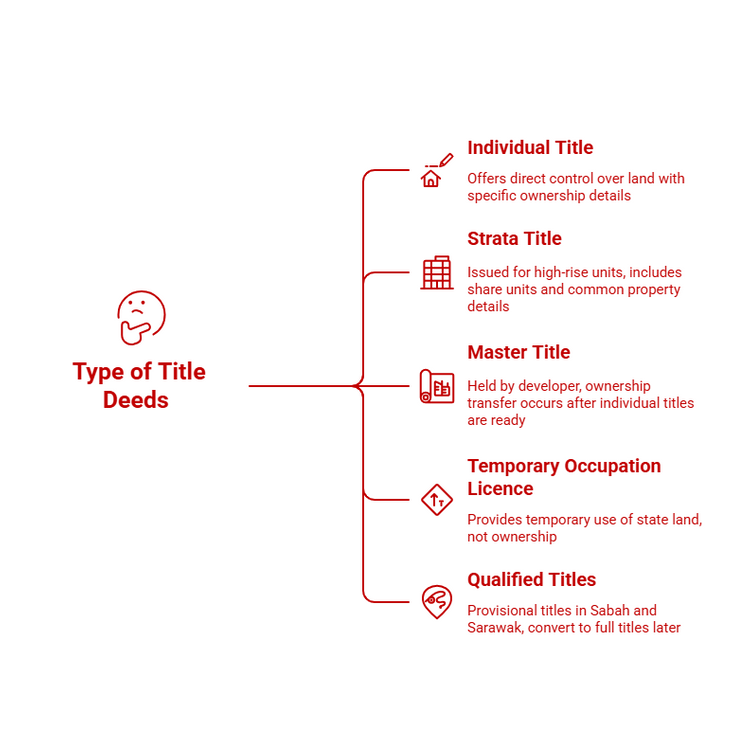
1. Individual Title
An individual title is issued for landed properties such as terrace houses, semi-detached homes, and bungalows. It shows the specific land lot, boundaries, and ownership details.
Owners have direct control over the land, subject to conditions listed on the title.
2. Strata Title
A strata title is issued for high-rise units and landed strata developments. It includes details of the parcel, share units, and the common property.
Strata titles often take time to be issued, especially in new developments, so many owners start with a Deed of Assignment before the strata title is ready.
3. Master Title
A master title is held by the developer before individual or strata titles are issued. When buying a new property, your name does not appear on the master title.
Transfer happens only after the individual or strata title is ready. Until then, owners use the Sale and Purchase Agreement and other documents to show their rights.
4. Temporary Occupation Licence (TOL)
A Temporary Occupation Licence is not a title deed. It gives permission to occupy and use a piece of state land for a set period. It does not grant ownership and cannot be sold in the same way as titled properties.
5. Qualified Titles (Sabah and Sarawak)
In Sabah and Sarawak, certain land categories may start with provisional or qualified titles while surveys or approvals are still in progress. These titles later convert to full titles once all conditions are met.
With these title types in mind, you can make decisions with more confidence.
What does A Malaysian Title Deed include?
A Malaysian title deed contains several vital details that indicate the property’s legal status. Each item plays a role in confirming ownership and identifying any conditions or restrictions. Buyers should always check these details before committing to a purchase.
- Owner’s Name: This shows who legally owns the property. The name must match the name on the seller’s identification documents.
- Title Number: The unique identification number assigned to each property. The Land Office uses it to track and verify all legal records tied to the property.
- Lot Number or Parcel Number: Landed properties come with lot numbers, while strata units have parcel numbers. These identifiers confirm the property’s exact physical location.
- Land Tenure: Indicates whether the land is freehold or leasehold. For leasehold properties, the title will also show the remaining lease period.
- Land Category and Conditions: Shows the land-use category, such as residential, commercial, or agriculture. It may also outline conditions or restrictions related to renovation, subdivision, or specific activities.
- Restrictions on Interest: Some titles require state authority consent before any transfer can happen. This is often seen in leasehold properties or special land categories.
- Encumbrances: Lists any existing claims like bank charges, caveats, or liens. These must be resolved before a transfer or refinancing can proceed.
- Property Size: Specifies the land or parcel size, usually in sq ft or square metres, to confirm the actual dimensions of the property.
- Rights and Interests: Includes rights such as access, easements, or shared facilities, which are particularly common in strata developments.
These details help you see the property’s true status and spot any issues early.
Individual Title vs Strata Title: Key Differences Buyers Should Know
Most properties in Malaysia fall under individual titles or strata titles. The table below shows the main differences in a simple way.
Property Type
Landed homes such as terraces, semi-detached, and bungalows
High-rise units and landed strata developments
Land Control
Full control over the land
Shared control under strata rules
Title Details
Shows land lot and boundaries
Shows parcel number and share units
Common Areas
No shared common areas
Includes common areas managed by the Joint Management Body (JMB) or Management Corporation (MC)
Renovation Rules
More flexibility, subject to local authority approvals
Stricter rules; changes must follow strata regulations
Maintenance Fees
Not compulsory unless in gated communities
Mandatory monthly maintenance and sinking fund payments
Issuance Timeline
Usually faster once land work is complete
Often delayed, especially in new developments
Documents Used Before Title Is Ready
Rare
Usually, a Deed of Assignment is used if the strata title is not ready
Management
The owner manages their own land
Shared management under JMB or MC
Impact On Resale
Buyers may prefer clearer land ownership
Buyers may prefer buildings with strong management
This comparison makes it easier to understand how each title works in everyday ownership.
Freehold vs Leasehold Titles: What It Means For Buyers In 2026
Property titles in Malaysia fall under two main land tenures: freehold and leasehold. Each tenure affects long-term ownership, rights, and the property’s future value. Understanding the difference helps you make informed decisions before buying.
What Freehold Means
Freehold land gives owners the right to hold the property indefinitely. There is no expiry date. Owners can transfer, sell, or refinance the property without needing state authority consent, unless restrictions are listed on the title. Freehold properties are often preferred because of their long-term stability and ease of transfer.
What Leasehold Means
Leasehold land is owned for a set number of years, usually 30, 60, or 99 years. Once the lease term expires, the property’s value may be affected. Renewal is possible, but it requires state approval and payment. Most leasehold transfers also require state authority consent, which may delay the process.
Why The Difference Matters?
Demand for both freehold and leasehold properties continues to grow, but buyers are more aware of remaining lease periods, renewal costs, and state policies. The land tenure can also affect loan eligibility, refinancing options, and future resale. Buyers should always check the remaining lease period and any restrictions on interest before committing.
Knowing your land tenure helps you plan your finances, long-term ownership, and exit strategy.
Explore Freehold Homes Instantly
Browse top freehold properties available right now.
How To Check A Property’s Title Status?
Checking a property’s title is an important step before buying. It helps you confirm the actual owner, identify restrictions, and detect any problems that could affect the transaction. You can check a title by either offline or online methods, depending on the state.
1. Checking Through The Land Office
You can visit the state Land Office or Pejabat Tanah to request a title search. This search shows the latest ownership record, encumbrances, restrictions in interest, and any caveats. It is one of the most reliable ways to confirm the property’s legal status.
2. Checking Through Online Portals
Some states offer online services that let you view basic title information. These platforms allow you to check title numbers, ownership status, and encumbrances. Availability varies by state, and not all records are fully digitised.
One example is e-Tanah, which is available in selected states such as Selangor and Kuala Lumpur. Availability varies by state, and not all records are fully digitised.
3. What To Verify During A Title Check
A title search should confirm several key points:
- Owner’s name
- Title number
- Lot or parcel number
- Land tenure
- Land category
- Restrictions on interest
- Encumbrances such as bank charges
- Caveats lodged by third parties
Any mismatch in these details may delay the transaction or indicate a potential issue.
A proper title check helps you avoid disputes, hidden claims, and properties that cannot be transferred. It also ensures you are dealing with the rightful owner. Completing this step early can save time and reduce risk.
Special Cases: When A Title Deed May Not Be Issued Yet
There are situations where a property does not have an individual or strata title ready. This is common in certain stages of development or in older neighbourhoods. Buyers should understand these cases so they know what documents apply and what risks to look out for.
1. Under-Construction Properties
New developments are sold while the master title is still under the developer’s name. Until the individual or strata titles are issued, buyers depend on the Sale and
Purchase Agreement and a Deed of Assignment. This is normal, but it means the transfer to your name only happens later.
2. Strata Titles Not Ready Yet
Some completed high-rise projects may still rely on the master title. Strata titles can take years to be issued because the process involves surveys, approvals, and submissions to the Land Office. Owners can still live in the property, but the delay may affect refinancing or selling.
3. Older Properties Without Updated Titles
Certain older homes may not have had their titles updated after earlier transfers. Owners may hold old documents that were never properly registered. This creates complications when trying to sell, refinance, or transfer ownership.
4. Gated And Guarded Landed Schemes
In some gated communities, titles may not be issued immediately, especially if the project uses a mixed title arrangement. Titles are released only after the developer completes all required submissions and approvals.
5. Sabah And Sarawak Provisional Titles
In East Malaysia, some land may be held under provisional or qualified titles. These are temporary titles issued while surveys or conditions are being completed. They will be converted to full titles once all requirements are met.
Understanding these situations helps you know what to expect and what documents you need while waiting for the title to be ready.
Title Deeds For Foreign Buyers In Malaysia
Foreign buyers can own property in Malaysia, but certain rules affect the types of titles they can hold and the minimum purchase price. Understanding these rules helps avoid delays during the transfer process.
1. Minimum Purchase Price
Most states set minimum price thresholds for foreign ownership. These thresholds vary by state and apply to both freehold and leasehold properties. Buyers should check the latest state guidelines before committing to a purchase.
2. Restrictions on Interest
Some properties are subject to restrictions on foreign ownership. Examples include Malay Reserve Land and certain Bumiputera units. These restrictions are stated in the title. If they apply, the property cannot be transferred to a foreign buyer.
3. Strata Properties
Foreigners can buy strata properties as long as the unit meets the state’s minimum price requirement. The Strata Management Act applies to all strata developments, so foreign owners must follow the same rules as local owners.
4. Landed Properties
Foreign ownership of landed properties depends on state rules. Some states allow it above a certain price, while others may require special approval. Buyers should confirm the title’s status and any restrictions listed on it.
5. State Authority Consent
In many cases, foreign buyers must obtain state authority consent before the transfer can be completed. This applies more often to leasehold titles. The approval timeline may vary between states.
Knowing these rules helps foreign buyers avoid restricted properties and keep the transfer process smooth.
Try The PropertyGuru App
No more daily hunting. Let the right properties come straight to you.
Ready To Buy A Property With Confidence?
Understanding title deed meaning helps you avoid delays, disputes, and costly surprises. Many buyers face issues because they did not check the title early or did not know what to look for. With the right knowledge, you can review ownership, confirm restrictions, and move through the buying process with clarity.
If you want to learn more about buying safely and making better property decisions, the next step is simple.
Disclaimer: The information is provided for general information only. PropertyGuru International (Malaysia) Sdn Bhd makes no representations or warranties in relation to the information, including but not limited to any representation or warranty as to the fitness for any particular purpose of the information to the fullest extent permitted by law. While every effort has been made to ensure that the information provided in this article is accurate, reliable, and complete as of the time of writing, the information provided in this article should not be relied upon to make any financial, investment, real estate or legal decisions. Additionally, the information should not substitute advice from a trained professional who can take into account your personal facts and circumstances, and we accept no liability if you use the information to form decisions.
Disclaimer: The information is provided for general information only. PropertyGuru International (Malaysia) Sdn Bhd makes no representations or warranties in relation to the information, including but not limited to any representation or warranty as to the fitness for any particular purpose of the information to the fullest extent permitted by law. While every effort has been made to ensure that the information provided in this article is accurate, reliable, and complete as of the time of writing, the information provided in this article should not be relied upon to make any financial, investment, real estate or legal decisions. Additionally, the information should not substitute advice from a trained professional who can take into account your personal facts and circumstances, and we accept no liability if you use the information to form decisions.