


Buying a property in Malaysia is one of life’s most significant financial milestones, marking the beginning of a journey that combines aspiration and responsibility. From scouting the perfect home to finalising the Sale and Purchase Agreement (SPA), every stage requires careful consideration and financial discipline.
At the heart of this process lies the earnest deposit, a small but pivotal first payment that reflects your genuine intent to purchase and lays the groundwork for a smooth, secure transaction.
As we move into 2026, digital convenience has transformed how property deals are conducted, but it has also introduced new challenges. With online transactions now standard and property scams becoming increasingly sophisticated, understanding how earnest deposits work and how to safeguard them has never been more critical, whether you’re buying your first apartment in Kuala Lumpur or adding an investment unit in Penang.
Explore rental homes across Malaysia
Find units that match your budget.
What Is an Earnest Deposit?
An earnest deposit, also known as a booking fee or good-faith deposit, is a sum paid by a potential buyer to a seller or developer as proof of genuine intent to purchase a property.
Think of it as a "reservation" payment that temporarily takes the property off the market. It counts toward your total down payment, signalling that you’re not casually browsing but are ready to move forward.
Typically, this payment is made after both parties agree on the purchase price and before signing the Sale and Purchase Agreement (SPA).
In Malaysia, most agents and lawyers treat the earnest deposit as part of the initial 10% down payment, meaning it will later be deducted from that total once the SPA is executed.
How Much Is the Earnest Deposit in Malaysia?
In Malaysia, the earnest deposit typically ranges between 2% and 3% of the agreed property price. This initial payment signals your serious intent to buy and secures the property while the formal sale documents are being prepared.
For instance, if you’re purchasing a home valued at RM600,000, you can expect to pay an earnest deposit of RM12,000 to RM18,000.
This amount demonstrates your commitment to the seller and effectively takes the property off the market while both parties finalise the Sale and Purchase Agreement (SPA).
However, it’s important to note that this figure isn’t legally fixed. The actual percentage can vary depending on several factors, including the type of property (whether it’s a subsale, new launch, or auction), specific seller or developer policies, and market conditions.
In highly competitive areas, such as Kuala Lumpur city centre or Penang Island, sellers may request a higher deposit to discourage multiple offers.
Most importantly, ensure that the exact deposit amount and all accompanying terms are clearly detailed in a written Letter of Offer (LOO) before making any payment.
This document serves as your first line of protection, helping to prevent disputes and safeguard your funds in the early stages of the transaction.
Why is the Earnest Deposit Important?
The earnest deposit plays several vital roles in Malaysia’s property ecosystem:
- Shows Serious Intent: It tells the seller that you’re financially prepared and genuinely interested. This assurance often gives your offer an edge, especially in competitive property markets where multiple buyers are vying for the same unit.
- Secures the Property: Once paid, the seller typically stops showing the property to other buyers. This provides you with valuable breathing space to finalise loan approvals, prepare documents, and proceed confidently with the purchase.
- Locks the Price: It freezes the negotiated price until the SPA is signed and executed. Even if market values fluctuate during this period, you’re protected from sudden price increases or competing bids.
- Builds Trust: When handled correctly through a licensed agency, it demonstrates transparency and professionalism, fostering trust. It reassures both parties that the process is legitimate, as payments are safeguarded under proper client accounts in accordance with the law.
Without this deposit, sellers have no assurance that buyers won’t change their minds, while buyers risk losing the property to others who move faster.
How to Pay an Earnest Deposit Safely?
Here’s where caution matters most. Property fraud cases have risen sharply. Bank Negara Malaysia and LPPEH have repeatedly warned consumers about identity theft, fake agents, and unregistered negotiators.
To safeguard yourself:
- Always make payments only to a registered estate agency, not to any individual (even if they claim to be the seller or negotiator). Ensure the agency holds a client account in compliance with Section 30(3) of the Valuers, Appraisers, Estate Agents and Property Managers Act 1981, as required by law.
- Confirm agency registration on LPPEH’s official website.
- Obtain an official receipt that includes the agency name, registration number, property details, and the date.
- Avoid using cash; instead, use a traceable method, such as a bank transfer or a crossed cheque.
- Request a written acknowledgement that your deposit will be held as stakeholder money until the SPA is signed and returned.
If you’re dealing with a new development, payments should be made directly to the developer’s client account, not personal accounts or "marketing teams".
Tip: You can verify your agent’s authenticity by checking their REN or REA number in LPPEH’s e-Search system.
Common Mistakes and Scams To Avoid
As Malaysia’s property market moves increasingly online, scams have become more creative.
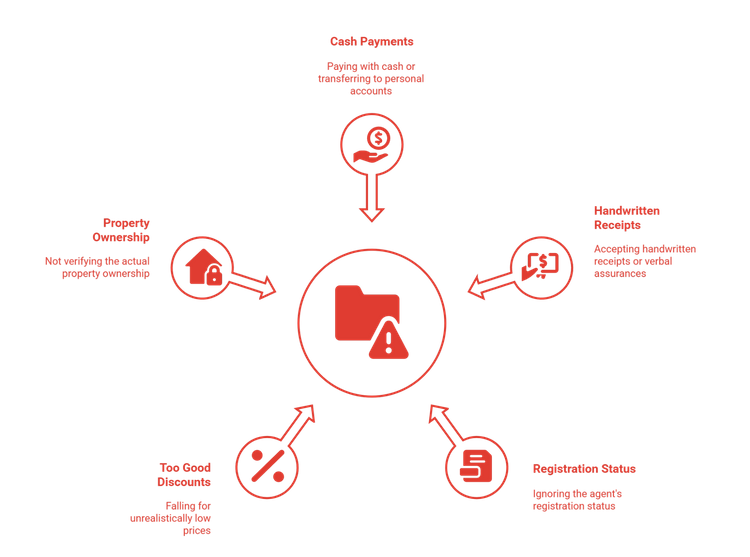
Avoid these pitfalls:
- Paying cash or transferring funds to a personal account.
- Accepting handwritten receipts or verbal assurances.
- Ignoring the agent’s registration status.
- Falling for "too good to be true" discounts or last-minute urgency tactics.
- Not verifying the actual property ownership.
Some scammers even duplicate real listings and impersonate legitimate agents. Always contact the agency’s main office number (not just the mobile provided) to confirm the negotiator’s identity.
Estimate your monthly repayments with ease
Understand your financing range before you commit
Refund Rules and Legal Clauses
The question most buyers ask is: Can I get my earnest deposit back if the deal doesn’t go through?
It depends entirely on what’s stated in your Letter of Offer.
1. When You Are Entitled to a Refund
You’ll usually receive a full refund if:
- The seller changes their mind or sells to another party.
- The property has hidden legal issues that prevent the sale.
- The bank rejects your housing loan (provided the offer letter includes this clause).
2. When You Lose Your Deposit
You may forfeit your deposit if:
- You, as the buyer, withdraw from the purchase without a valid reason.
- You fail to sign the SPA within the specified period (often 14-21 days).
Hence, always ensure your LOO clearly includes loan approval and SPA timeline clauses.
Sample Clause:
"Should the Purchaser fail to secure financing approval within 21 days, the Vendor shall refund the earnest deposit in full, without deduction."
"Should the Purchaser fail to secure financing approval within 21 days, the Vendor shall refund the earnest deposit in full, without deduction."
Consult a conveyancing lawyer to review your offer letter before signing.
Timeline After Paying the Earnest Deposit
Here’s a typical sequence after payment:
1
Sign Letter of Offer
Day 1
2
Submit a loan application
Within 7 days
3
Receive loan approval
Within 14-21 days
4
Sign SPA
Within 14 days of loan approval
5
Balance down payment (7%)
Upon SPA signing
Legal Safeguards and Buyer Protection in 2026
Malaysia’s property sector is tightly regulated by:
- Housing Development (Control and Licensing) Act 1966 (HDA)
- Valuers, Appraisers, Estate Agents and Property Managers Act 1981
- LPPEH guidelines
Since 2024, LPPEH has enhanced its digital verification portal to reduce identity-related fraud. Meanwhile, KPKT (Ministry of Local Government Development) has introduced stricter deposit-handling protocols for licensed agencies to protect consumers.
If you encounter misconduct, report it to LPPEH via their official complaint channel. You may also file a police report if fraud is suspected.
Practical Tips for Safer Property Transactions
Always verify that your property agent is registered with the Board of Valuers, Appraisers, Estate Agents and Property Managers (BOVAEP). Confirm their REN or REA number through official channels to ensure they are legitimate professionals authorised to handle client funds.
- Avoid Emotional Decisions: Scammers Often Exploit Excitement and Urgency. Be cautious of agents or sellers who pressure you to "act fast" or claim that other buyers are waiting. Take a step back, review all terms calmly, and verify every promise made before transferring any money.
- Document Everything, Including Emails and Receipts: Keep meticulous records of all correspondence, payment proofs, and agreements. In the event of disputes or misunderstandings, this documentation serves as vital evidence and ensures a clear audit trail throughout your purchase process.
- Hire a Lawyer Early in the Buying Process: Engaging a property lawyer from the outset ensures that all contracts, such as the Letter of Offer (LOO) and Sale and Purchase Agreement (SPA), are reviewed for fairness and legal accuracy before you commit.
- Never Rush Into Paying Deposits Without a Proper Letter of Offer: A formal LOO should clearly state the purchase price, payment terms, refund conditions, and parties involved. Paying without this document leaves you vulnerable if the deal falls through or disputes arise later.
- Use Verified Listings: Use listings where agent details are clearly shown and cross-checked so that you can make informed comparisons with confidence. By relying on verified listings, you minimise the risk of fraudulent postings and can confidently reach out to legitimate, traceable agents.
Taking these steps may seem cautious, but they provide crucial peace of mind. Performing a few extra checks today can help you avoid potential financial loss and ensure your property transaction proceeds smoothly and securely.
Protecting Your Investment
In Malaysia’s modern property market, the earnest deposit remains a powerful gesture of intent, but also a potential trap for the unprepared. Handled correctly, it lays the foundation for a fair and transparent transaction. Mishandled, it can lead to unnecessary losses or even legal trouble. So, take the extra step: verify your agent, document every transaction, and never pay a single sen without an official trail.
When in doubt, refer to PropertyGuru Malaysia, where every listing connects you with verified agents and transparent property data. Your dream home deserves nothing less than complete peace of mind.
Keep Track of New Launches
Visit our new launches page to find the new launch project of your dreams and submit an enquiry today.

Disclaimer: The information is provided for general information only. PropertyGuru International (Malaysia) Sdn Bhd makes no representations or warranties in relation to the information, including but not limited to any representation or warranty as to the fitness for any particular purpose of the information to the fullest extent permitted by law. While every effort has been made to ensure that the information provided in this article is accurate, reliable, and complete as of the time of writing, the information provided in this article should not be relied upon to make any financial, investment, real estate or legal decisions. Additionally, the information should not substitute advice from a trained professional who can take into account your personal facts and circumstances, and we accept no liability if you use the information to form decisions.