

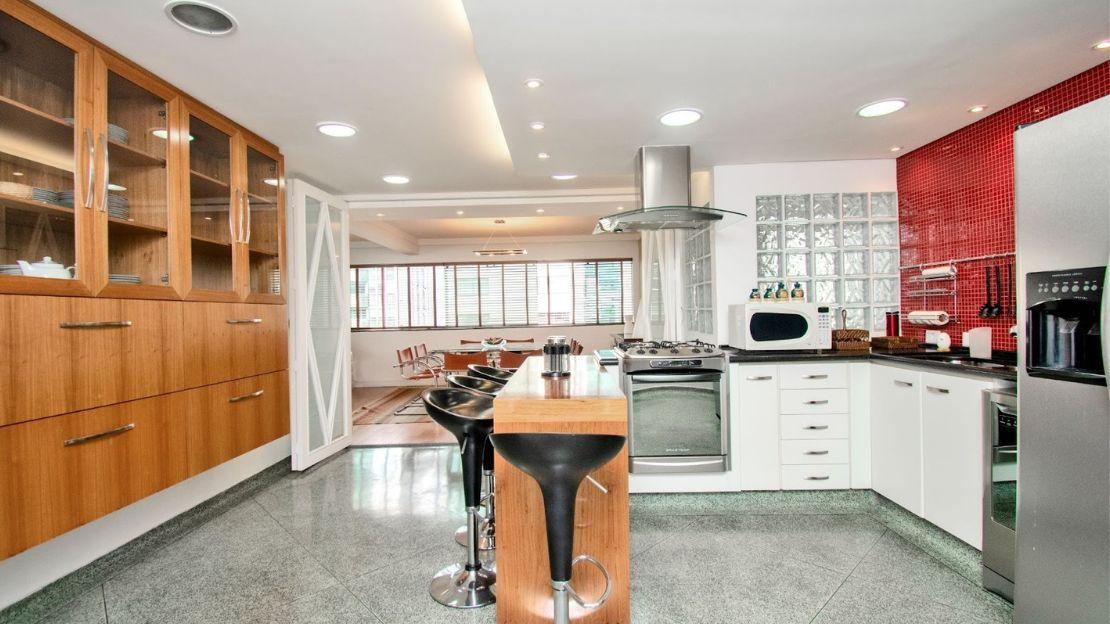
Kitchen space in Malaysian condominiums is becoming smaller, especially in newer developments across major cities. Limited countertop area, minimal cabinet storage, and compact layouts often make cooking and daily routines challenging. Many homeowners struggle with clutter, poor planning, and appliances with no proper space.
A good Malaysia condo kitchen design can change the way a home functions. A thoughtful layout improves movement and convenience. Smart storage increases usable space. Proper lighting and ventilation make the kitchen more comfortable. A well-designed kitchen also adds value to a condominium and strengthens rental appeal in a competitive property market.
This guide covers practical layout ideas, current 2026 design trends, and innovative space-saving solutions to help you make the most of your kitchen space.
Plan Better, Renovate Smarter.
Estimate renovation affordability before getting started.
What Makes Malaysia Condo Kitchen Design Unique?
Designing a kitchen in a Malaysian condominium comes with particular challenges compared to landed homes. Space is limited, movement must be efficient, and every design choice needs purpose.
Most condominium kitchens are compact, narrow, and built into open-plan layouts. This makes planning more important because there is little room for mistakes.
Key factors that make Malaysia condo kitchen design different:
- Limited space: Smaller layouts mean countertops, cabinets, and appliances must be carefully selected and positioned.
- Ventilation challenges: Strong cooking smells and heat travel quickly through connected living spaces, so a good hood and proper air circulation are essential.
- Fixed plumbing and electrical points: Many condominium units restrict hacking and layout changes, so planning must work around existing structure and service shafts.
- Local cooking habits: Stir-frying, deep-frying, and boiling require heavy-duty surfaces, good ventilation, and more practical storage.
- Wet and dry zoning needs: Separating heavy cooking from prep and serving space helps control grease, noise, and odour in compact homes.
These realities mean Malaysia condo kitchen design relies heavily on innovative layouts, space-saving storage, durable materials, and thoughtful planning. When done well, even the smallest kitchen can feel organised and comfortable.
Best Kitchen Layouts for High-Rise Condominium Spaces
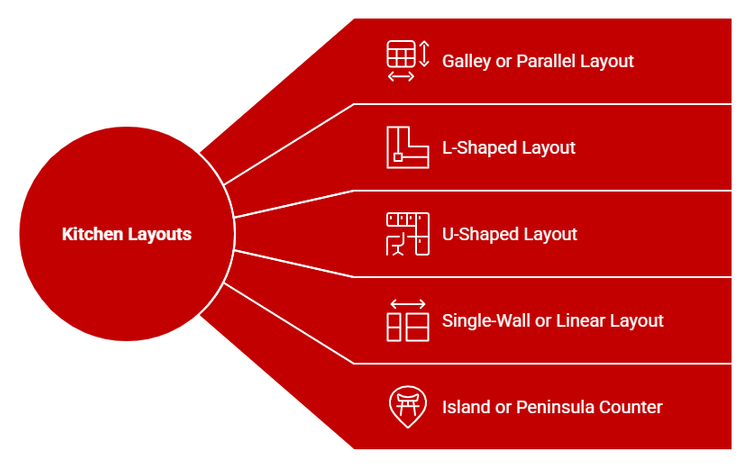
Selecting the right layout is one of the most important steps in Malaysia condo kitchen design. Space in a condominium kitchen is limited, so the layout must maximise every inch, facilitate smooth movement, and support daily cooking tasks. The right layout also improves comfort and allows the kitchen to blend well with the living and dining areas.
Below are the layouts that work best for Malaysian condominium kitchens, depending on size and lifestyle needs.
1. Galley or Parallel Layout
A popular choice for narrow condominium kitchens. Two counters face each other, creating a compact and efficient workspace.
Why it works well:
- Short walking distance between tasks
- Good workflow for two people cooking
- Allows full-height cabinets on both sides
Things to consider:
- Needs enough aisle space for safe movement
- Works best with organised vertical storage
2. L-Shaped Layout
Uses two connected walls to form an L shape. Suitable for small to medium-sized condominium kitchens.
Why it works well:
- Maximises corner areas that are often wasted
- Creates an open feel and keeps the layout flexible
- Allows room for a dining table, breakfast counter, or compact island
Things to consider:
- Corner cabinet planning is important for accessibility
- Appliance placement should follow work-triangle logic
3. U-Shaped Layout
Offers three sides of counter and cabinet space, providing excellent storage and work surface.
Why it works well:
- Great for homeowners who cook every day
- Provides more storage than other layouts
- Keeps all work zones within close reach
Things to consider:
- Best suited for larger condo kitchens with enough walking space
- Can feel tight if clearance is less than recommended
4. Single-Wall or Linear Layout
All work zones are placed along one wall. Ideal for studio units or very compact kitchens.
Why it works well:
- Saves space while maintaining functionality
- Leaves more room for dining or living area
- Works well with tall cabinets for extra storage
Things to consider:
- May need a strong hood due to open exposure to the living area
- Countertop space can be limited without careful planning
5. Island or Peninsula Counter
Adds workspace, storage, and seating. Also helps define zones in open-plan layouts.
Why it works well:
- Creates a social space for family and guests
- Provides additional storage and prep area
- Helps separate the kitchen from the living and dining zones
Things to consider:
- Requires proper walking clearance around all sides
- Oversized islands can restrict movement in small units
Choosing the correct layout depends on cooking habits, storage needs, and available space. A well-planned layout improves workflow, keeps the kitchen organised, and makes the overall home feel larger and more comfortable.
Exclusive sales listings
Discover available condominium units today.
How Are Kitchen Spaces Evolving in Malaysian Condominiums in 2026?
Kitchen design trends in Malaysian condominiums continue to evolve as homeowners focus on functionality, comfort, and modern aesthetics.
Before exploring the trends, it is important to understand what homeowners prioritise most: convenience, easy maintenance, storage, and better airflow. These needs have shaped the latest design directions in condominium kitchens.
Popular trends shaping Malaysia condo kitchen design in 2026 are:
- Minimalist and Scandinavian styling: Clean lines, natural wood textures, and soft colour tones that make small spaces feel calmer and more open.
- Open-plan layouts integrated with living areas: Creates a larger visual space and improves social interaction, especially in smaller units.
- Glass or steel-framed partitions: Help separate wet and dry areas or contain cooking odours while allowing light to flow through the space.
- Smart appliances and built-in technology: Compact ovens, integrated refrigerators, induction hobs, and app-connected appliances save space and improve efficiency.
- Sustainable, moisture-resistant materials: More homeowners are choosing quartz countertops, high-pressure laminate cabinets, and SPC flooring because they withstand heat, moisture, and daily wear.
- Bold accent colours: Matt black, navy blue, olive green, and muted terracotta add character without overwhelming small spaces.
- Open shelving and display storage: Provides convenient access to frequently used items and visually opens up compact kitchens.
- Task and under-cabinet lighting: Better visibility during food preparation and a brighter working environment, without replacing any fixtures.
These 2026 design trends focus on simplicity, smart storage, durability, and seamless integration with the rest of the home. Adopting the right combination of these elements can significantly enhance comfort and improve the usability of a small condominium kitchen.
Good design choices matter most when space is limited. The next important step is finding ways to maximise storage without making the kitchen feel cramped.
Space-Saving Storage Solutions for Compact Condo Kitchens
Storage plays a major role in how well a condominium kitchen functions. Limited space means every cabinet, shelf, and drawer needs to serve a purpose.
Here are practical storage solutions that work well in Malaysian condominium kitchens:
1. Full-height cabinetry
Uses vertical space to increase storage capacity without taking up more floor area. Helps reduce visible clutter.
- Ideal for storing seasonal or less frequently used items at the top
- Can include built-in appliance slots to save counter space
2. Pull-out pantry and corner storage systems
Maximises awkward corner areas and narrow spaces that are often wasted.
- Pull-out drawers allow full visibility of items
- Prevents food or kitchen supplies from getting lost in the back
3. Vertical storage and hanging hooks
Keeps essentials within reach and frees up countertop space.
- Works well above sinks or stoves for ladles, pans, or utensils
- Magnetic knife racks and rail systems are useful in small layouts
4. Multi-purpose island counters
Provides extra workspace, seating, and hidden storage beneath.
- Ideal for open-plan kitchens where space is shared with dining or living zones
- Can serve multiple functions such as food prep, dining, or display
5. Concealed and integrated appliances
Maintains a clean visual look and reduces clutter.
- Built-in fridge or dishwasher blends into cabinetry
- Keeps electrical points neat and organised
6. Sliding or bi-fold doors
Saves space compared to swinging doors and improves the flow of movement.
- Suitable for compact kitchens and walkways
- Can be combined with glass partitions to improve brightness
Innovative storage solutions help make small kitchens easier to manage and more comfortable to use every day. Well-planned organisation also supports cleaner design lines, making the room feel bigger and calmer.
Good storage planning works best when paired with durable and practical materials that can withstand daily cooking, heat, and humidity.
What Materials and Finishes Work Best for Malaysian Condominium Kitchens?
Many homeowners regret rushing into selections without considering daily use, heat, moisture, staining, and cleaning needs.
A beautiful kitchen can look tired very quickly if the wrong materials are used, especially in compact spaces where cooking activity is concentrated.
Here are the materials and finish options that work well in Malaysian condominium kitchens:
Materials and finishes commonly chosen for Malaysian condo kitchen design include:
- Quartz countertops: Strong heat and stain resistance. Easy to maintain and ideal for regular cooking. Available in many patterns for modern styling.
- High-pressure laminate cabinetry: Cost-effective, scratch-resistant, and suitable for humid environments. Available in matte, gloss, or wood finishes to suit different styles.
- Tempered glass or porcelain backsplash: Protects walls from oil and heat. Simple to clean with a quick wipe. Reflects light to brighten small kitchens.
- SPC or tiled flooring: both are water-resistant and durable. Works well in wet kitchen sections and withstands heavy usage.
- Matte surface finishes: Reduce fingerprints and offer a modern, soft appearance. Helps maintain a clean and minimal look.
- Stainless steel fixtures: Highly durable and rust-resistant. Ideal for sinks and wet areas, particularly when heavy washing is everyday.
Selecting the right materials helps kitchens stay functional, easy to maintain, and visually balanced. Smart choices ensure long-term comfort and reduce the need for frequent repairs or replacements.
Material planning becomes even more important when separating wet and dry zones in a condominium kitchen.
How Can Wet and Dry Kitchen Zones Be Planned in a Condo?
Many Malaysian households prefer separating wet and dry kitchen areas. This helps manage heavy cooking, oils, noise, and washing activities without affecting the rest of the living space.
Before exploring layout ideas, it is helpful to understand what each zone is responsible for and how it supports everyday tasks.
Common roles for each zone include:
1. Dry kitchen
Used for light cooking, serving, and hosting. Usually connected to the living and dining area.
- Ideal for preparation, baking, reheating, or making drinks
- Often includes an induction hob, oven, microwave, and display storage
2. Wet kitchen
Handles heavier cooking and cleaning activities.
- Suitable for deep frying, boiling, and washing large cookware
- Requires strong ventilation, durable surfaces, and stainless steel fixtures
Creating functional wet and dry zones in a condominium does not always require two separate rooms. Planning is more important than space. Before designing the layout, think about cooking habits, household size, and ventilation needs.
Practical ways to apply wet and dry zoning in condominium kitchens:
- Glass- or steel-framed partitions: Control smoke and odours while allowing light to flow through the space. Works well in compact kitchens.
- Sliding or bi-fold doors: Save space and allow zones to be opened or closed as needed.
- Separate countertops and storage systems: Assigning zones for prep items versus cookware supports efficient workflow.
- Dedicated ventilation for wet cooking: A strong hood and proper airflow prevent smells from spreading into living spaces.
- Durable surfaces in the wet section: Stainless steel, quartz, and tiled flooring help withstand heat and moisture.
Planning wet and dry zones helps kitchens stay clean, organised, and easier to maintain. Even a small space can function well with the proper separation methods and thoughtful planning.
Zoning works best when supported by good lighting, ventilation, and electrical planning, which are especially important in high-rise homes.
How Should Lighting, Electricals, and Ventilation Be Planned in a High-Rise Kitchen?
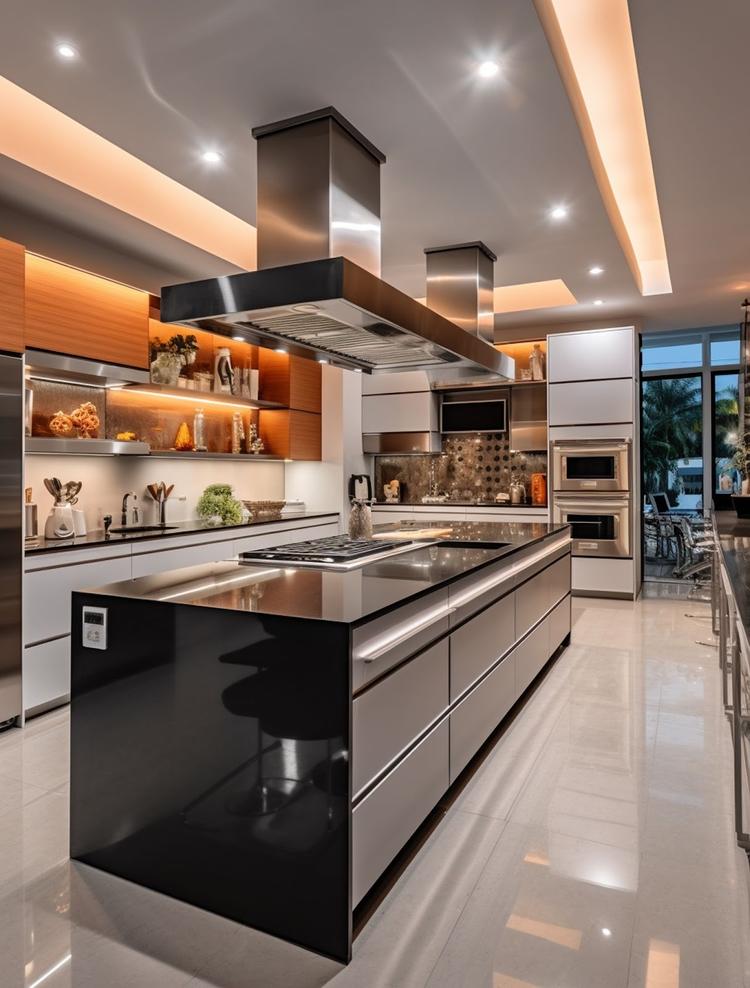
Many condominium owners struggle with strong cooking smells spreading through the living area, overheating in the kitchen, and dim workspaces that make food preparation difficult. These problems are common when planning is overlooked, especially in compact condominium layouts. Proper lighting, ventilation, and electrical planning can prevent these issues and improve daily comfort.
A few practical considerations should be carefully weighed when planning these features in a condominium kitchen.
1. Lighting Essentials
Before exploring specific lighting solutions, it helps to focus on visibility, brightness, and comfort.
- Layered lighting setup improves overall brightness and visibility in compact spaces.
- Under-cabinet lighting reduces shadows on worktops and supports safer cooking.
- A neutral white light tone enhances clarity and blends well with open-plan layouts.
2. Ventilation Requirements
Good airflow is important to prevent odours from spreading through small units.
- High-performance cooker hood helps control smoke, steam, and oil particles.
- Ducted ventilation (when permitted) removes heat and cooking smells more effectively.
- Steady airflow direction prevents heat from building up in enclosed spaces.
3. Electrical Planning
Electrical placement affects convenience, safety, and organisation.
- Sufficient power points help reduce loose cables and clutter.
- Dedicated circuits protect larger appliances and prevent overload.
- Plan appliance zoning early to avoid costly rewiring after installation.
Proper planning improves comfort, protects appliances, and helps kitchens stay organised and easy to work in every day. When these elements are considered early, even a small condominium kitchen can function smoothly.
Good planning also helps set realistic expectations before deciding how much to invest in a renovation.
How Much Should You Budget for a Condo Kitchen Renovation in 2026?
Many Malaysian homeowners begin kitchen renovations without a clear budget, only to face unexpected costs later. Condominium kitchens may be small, but renovation work often requires custom carpentry, appliance integration, and careful planning around fixed plumbing and electrical points. Understanding cost ranges early helps avoid overspending and ensures informed decisions.
Before exploring specific design ideas, it is helpful to understand common budget levels for condominium kitchens.
Estimated Price Ranges for Kitchen Renovation in Malaysian Condominiums
Here is a general reference range based on current market averages:
Basic Upgrade
RM6,000 – RM10,000
Minor touch-ups, repainting, small carpentry adjustments, and simple fixtures
Mid-Range Renovation
RM15,000 – RM30,000
New cabinets, countertop replacement, upgraded sink and tap, improved lighting, and basic appliances
Full Upgrade / Custom Build
RM30,000 – RM50,000+
Complete redesign, wet and dry zones, premium materials, major electrical changes, built-in appliances
Note: These figures are approximate and may vary depending on kitchen size, material selection, appliance brands, structural work, and labour quality.
A clear budget helps prioritise essential improvements and prevents unnecessary spending. It also supports better planning when comparing contractor or interior designer proposals.
Thoughtful budgeting is most valuable when paired with smart design decisions. Avoiding common mistakes can help ensure the renovation remains functional and future-proof.
What Common Mistakes Should Be Avoided in Malaysia Condo Kitchen Design?
Here are the key mistakes to watch out for:
- Oversized appliances that do not fit the layout: Make movement difficult and reduce counter space. Always measure and plan around clearances.
- Not prioritising storage: Leads to cluttered countertops and a lack of organisation. Smart storage is more important than decorative features.
- Poor ventilation planning: Cooking odour and heat spread quickly in open-plan spaces. Cooker hood power and airflow direction matter.
- Insufficient lighting: Creates dark corners and unsafe work areas. Task lighting should support food preparation.
- Choosing materials only for appearance: Some finishes are easily damaged by heat, oil, or moisture. Durability should guide selections.
- Rushing planning and budgeting: Leads to unexpected expenses and compromises during installation.
Avoiding these mistakes helps improve functionality, safety, and long-term comfort, especially in compact condominium layouts where space must work harder every day.
With common pitfalls in mind, real-life examples can offer a helpful perspective on what works well in small kitchens and how layout choices improve usability.
Your Mortgage Estimate in Moments
Understand your numbers and buy with confidence.
What Should You Consider Before Starting Your Condo Kitchen Renovation?
Designing a functional kitchen in a Malaysian condominium can be challenging, especially with limited space, ventilation issues, and tight renovation budgets.
A well-planned kitchen makes daily cooking easier, keeps the home organised, and improves overall comfort. It can also increase property value and appeal to future buyers or tenants.
Looking to upgrade or move to a unit with a larger kitchen? Explore available sales listings across Malaysia to find options that suit your lifestyle.
Disclaimer: The information is provided for general information only. PropertyGuru International (Malaysia) Sdn Bhd makes no representations or warranties in relation to the information, including but not limited to any representation or warranty as to the fitness for any particular purpose of the information to the fullest extent permitted by law. While every effort has been made to ensure that the information provided in this article is accurate, reliable, and complete as of the time of writing, the information provided in this article should not be relied upon to make any financial, investment, real estate or legal decisions. Additionally, the information should not substitute advice from a trained professional who can take into account your personal facts and circumstances, and we accept no liability if you use the information to form decisions.